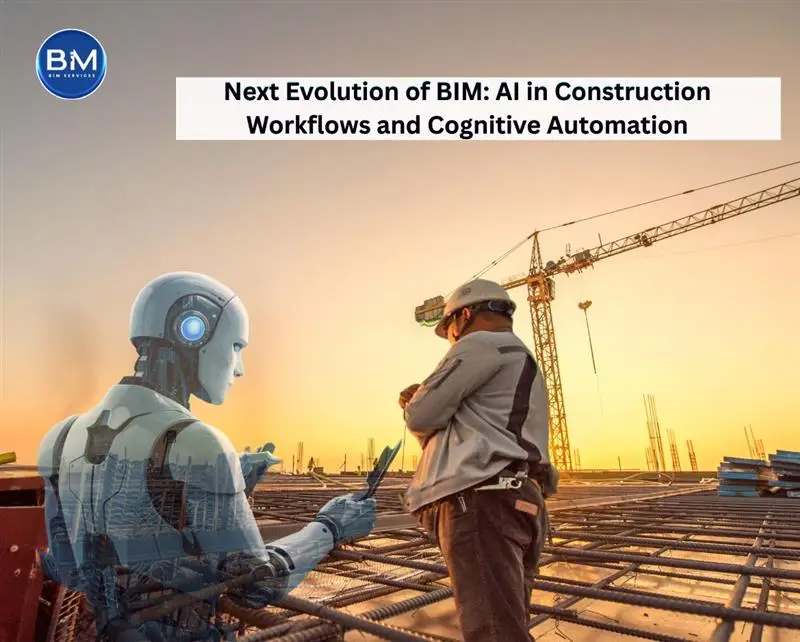
Building Information Modeling (BIM) has become a mainstream force in construction over the past decade, and today, the next shift is being driven by AI in construction workflows. It’s made it easier to visualize projects, spot clashes early, and work together on the fly. Basically, BIM turned the messy handoff between design and the real thing into something much smoother. But here’s the thing—there’s still a big snag no one likes to talk about: paperwork and documentation are weighing everything down. We’ve gotten better at designing and building, no doubt about that. Still, the way we handle and move information? That’s a problem AI in construction workflows is now beginning to solve.
The Real Bottleneck in AI in Construction Workflows
- Despite BIM advancements, paperwork still dominates construction workflows
- Professionals deal with massive technical documents (often 1000+ pages)
- Time is spent on:
- Submittals Transmittals
- RFIs (Requests for Information)
- Compliance documents
- Project approvals
- Coordination becomes difficult due to:
- Fragmented files
- Inconsistent documentation
- Tasks are repetitive and error-prone
- Valuable time is wasted on administrative work
- Skilled professionals are diverted from:
- Decision-making
- On-site problem-solving
- Project coordination
- Overall impact: reduced efficiency and productivity
Enter AI in Construction Workflows: A Shift Toward Cognitive Automation
The next big shift in digital transformation is all about bringing AI in construction workflows into everyday operations, especially when it comes to handling tasks that chew up time and paperwork. Instead of the usual focus on sensors, drones, or analyzing job sites, this approach is different. It centers on making sense of messy, unstructured data like specs and contracts, pulling real insights out of documents, letting folks interact with project info through conversation, and cutting out the boring admin work. This isn’t about pushing people out of the picture. It’s about giving them new tools and making their jobs easier.
Why BIM Alone Is Not Enough Anymore
BIM has been instrumental in creating structured digital environments. However, it primarily addresses geometric and coordination challenges, leaving documentation workflows largely manual.
Key limitations include:
- Heavy reliance on manual data entry and interpretation
- Limited integration with textual and compliance-based data
- Lack of intelligent automation in submittal and documentation processes
- Fragmented workflows between BIM models and supporting documents
To truly “work smarter,” the industry must extend BIM into intelligent, document-aware ecosystems.This is where AI in construction workflows becomes essential to bridge the gap between models and real-world execution.
How AI is Transforming Construction Documentation Workflows
The rise of document-native systems is a key advancement in AI in construction workflows, enabling teams to automate and streamline documentation processes.
What this looks like in practice:
- Automatically extracting submittal requirements from specifications
- Generating structured outputs in Excel or Word formats
- Enabling natural language queries like:
“List all submittals under Division 07” - Reducing hours of manual effort into minutes
Key benefits include:
- Significant reduction in administrative workload
- Improved accuracy and consistency in documentation
- Faster turnaround times for project deliverables
- Enhanced decision-making through quick data access
Where BIM Services Fits Into This Evolution
At BIM Services, the journey has always been about enabling smarter construction through technology. With deep expertise in:
-
- Shop Drawings & As-Builts
- Pre-construction documentation
The natural progression is toward integrating AI in construction workflows to deliver faster, smarter, and more scalable project outcomes.
This evolution aligns with core principles:
- Working smarter, not harder
- Maintaining quality while accelerating timelines
- Leveraging technology without compromising human expertise
The future of construction will not just depend on better models—but on how intelligently we manage information across every stage of the project lifecycle.