Introduction
In the fast-paced world of construction and architecture, precision and efficiency are paramount. Enter Building Information Modeling (BIM) software, revolutionizing the way professionals design, construct, and manage building projects. In this blog, we’ll take a deep dive into the realm of BIM modeling software, exploring its features, benefits, and the leading players in the market.
Before delving into BIM software, it’s essential to understand the principles of Building Information Modeling. We’ll explore what BIM is, its advantages over traditional design methods, and how it facilitates collaboration among project stakeholders.
The Role of BIM Modeling Software
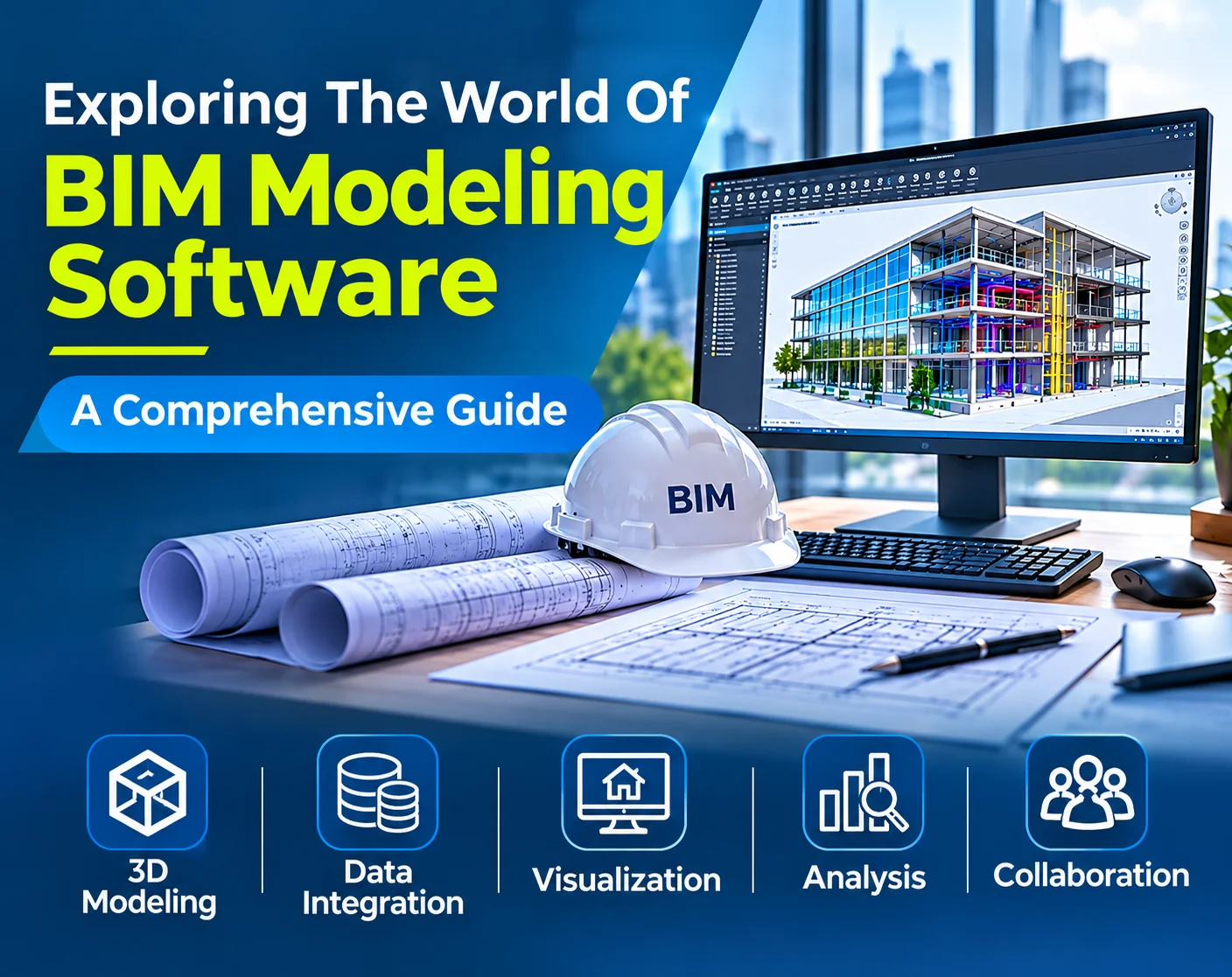
- 3D Model Creation: Develop detailed 3D representations of buildings and infrastructure.
- Data Integration: Combine architectural, structural, and MEP information into a unified model.
- Design Visualization: Present realistic visual representations of construction projects.
- Performance Analysis: Evaluate building design, structure, and project performance.
- Project Coordination: Improve collaboration and coordination among construction professionals.
Features to Look for in BIM Software
Choosing the right BIM software is essential for improving design accuracy, project coordination, and construction efficiency. Before selecting a BIM solution, consider the following key features:
- 3D Modelling Capabilities:Support for creating detailed architectural, structural, and MEP models with accurate dimensions and components.
- Collaboration Tools: Real-time coordination, model sharing, and communication between architects, engineers, contractors, and other stakeholders.
- Clash Detection: Automated identification of design conflicts between structural, architectural, and MEP systems before construction begins.
- Data Management: Centralised storage of project information, drawings, specifications, and model data for easy access and management.
- Visualization & Analysis: Advanced rendering, simulation, and analysis tools to evaluate designs, construction performance, and project feasibility.
Practical Applications of BIM Modeling Software
BIM modeling software is widely used across the construction and infrastructure industries to streamline project planning, design, coordination, and execution. It helps professionals manage complex projects with greater accuracy and efficiency. Some of its key practical applications include:
- Architectural Design: Creating detailed 3D building models, floor plans, elevations, and construction layouts.
- Structural Engineering: Developing structural models of foundations, beams, columns, and reinforcement systems.
- MEP Coordination: Integrating mechanical, electrical, and plumbing systems while identifying design conflicts through clash detection.
- Construction Planning: Supporting project scheduling, quantity estimation, cost management, and construction sequencing.
- Facility Management: Maintaining digital building records to support asset tracking, maintenance planning, and lifecycle management.
Benefits of BIM Modeling Software
BIM modeling software offers significant advantages throughout the construction lifecycle, helping professionals improve project accuracy, reduce costs, and streamline collaboration. Some of its key benefits include:
- Improved Accuracy: Creates detailed digital models that minimise design errors and inconsistencies.
- Better Collaboration: Enables architects, engineers, and contractors to work together using shared project information.
- Cost Reduction: Helps identify potential issues early, reducing rework, material waste, and unexpected expenses.
- Time Efficiency: Streamlines design coordination, construction planning, and project scheduling.
- Enhanced Visualization: Provides realistic 3D representations to help stakeholders understand designs before construction begins.
Emerging Trends in BIM Software
As technology continues to evolve, the future of BIM softwares holds exciting possibilities. We’ll explore emerging trends such as artificial intelligence, machine learning, virtual reality, and cloud-based computing, and discuss how these innovations are shaping the future of BIM modeling software
Conclusion
In conclusion, BIM modeling software has transformed the way building projects are designed, constructed, and managed. By harnessing the power of BIM software, professionals can unlock new levels of efficiency, accuracy, and collaboration, ultimately delivering better-built environments for communities around the world.